Optimising visibility in generative AI engines has become a key issue. GEO (Generative Engine Optimisation) is emerging as the natural extension of SEO. However, implementing a GEO strategy is not enough: you also need to know how to evaluate it.
And that is where the real challenge lies: how can you measure the performance and ROI of GEO? Which KPIs should you track to ensure that your brand is not only visible, but also perceived as credible and capable of generating business?
GEO: a field that remains unclear
By 2026, a quarter of searches are expected to move away from Google in favour of ChatGPT and other generative engines. This shift is already reshaping the brand discovery journey and transforming consumer touchpoints.
However, unlike Google, which provides a wealth of signals (Search Console, Ads, Analytics), LLMs (Large Language Models) such as ChatGPT, Gemini, and Perplexity remain black boxes. Very little native data is accessible, and the first monitoring tools are still in the experimental phase.
In this context, marketers must combine tangible indicators and indirect signals to track their GEO results.
Key performance indicators for the GEO
1. AI mentions and citations
This is the GEO’s flagship indicator. A brand mentioned in a generated response is perceived as a reliable source. Today, a recurring citation is equivalent to a number one position in SEO. Tracking these citations allows you to measure the legitimacy accorded by generative engines and identify whether your content is establishing itself as a reference on a given topic.
2. Referral traffic from generative engines
Even though the AI experience favours “zero-click”, source links continue to exist and bring qualified traffic. What’s more, this traffic is particularly valuable: a user who clicks from an AI response is often further along in their decision-making process. The result: a higher conversion rate than with traditional SEO.
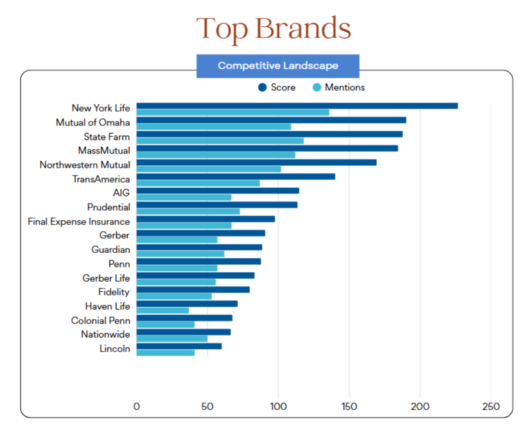
3. Share of voice in AI responses
However, it is not enough simply to be present: the frequency and significance of that presence must also be measured.
- Are you mentioned in 10%, 20% or 50% of the responses generated?
- Is your brand mentioned at the beginning or relegated to the bottom of the paragraph?
This KPI provides a clear view of how your content ranks against competitors in the generative ecosystem.
4. SEO & SEA brand traffic
An indirect but increasingly strategic indicator: monitoring trademark applications.
Example: a user asks ChatGPT “what is the best hotel in Chicago?” and then searches for your brand in Google. Ultimately, the increase in Brand or Direct traffic will be a strong proxy for assessing the impact of GEO on brand awareness.
Emerging signals to watch out for
Certain dimensions remain difficult to measure but will soon be decisive:
- The contextual quality of citations: are you cited as an expert or simply mentioned?
- Position in the response: content cited first has much more impact than a final mention.
- Brand vs AI differentiation: does the user attribute the information to your brand or to the AI itself?
These signals are not yet stabilised, but they are already shaping the perception of brands in generative environments.
Towards a new generation GEO dashboard
The 2025 GEO/GSO dashboard will combine hybrid metrics:
- AI citations and mentions
- referral traffic
- share of voice
- SEO/SEA traffic
- and qualitative indicators such as relevance, associated sentiment, and hierarchy in the response.
Therefore, tomorrow’s SEO will no longer be just a question of Google rankings. It will be based on brands’ ability to exist at the heart of AI-generated responses and to transform this visibility into business value. It will depend on two skills: knowing how to fully exploit the metrics available today and anticipating the value that will emerge from those metrics, still elusive, that will shape tomorrow’s optimisation.
Would you like to make your brand visible in generative AI engines? Contact our GEO agency to optimise your website now.



 Julien Soumahoro