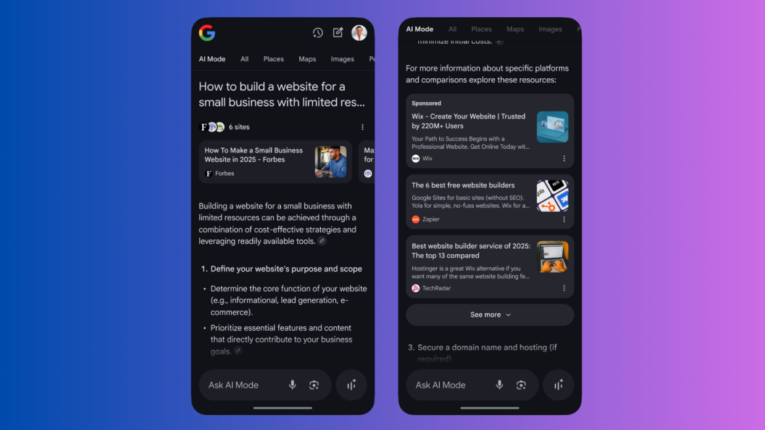
Google is taking automation one step further. In recent days, the Mountain View-based company has been presenting advertisers with a brand new experimental ad format: AI Mode Google Ads. Its goal? To give generative artificial intelligence a central role in the creation and delivery of campaigns. This initiative could radically transform the way campaigns are designed, launched… and measured.
AI Mode: a new testing ground for Google Ads
Presented as “the most powerful AI-powered search experience,” AI Mode Google Ads marks a break from Performance Max and Search Generative Experience (SGE).
In practical terms, this delivery method integrates directly into the AI-enhanced search interface. Google is currently testing it in the United States. The ads generated — whether text, visuals or sponsored answers — appear at the very heart of the conversational experience.
This new format therefore aims to respond more dynamically to the user’s intention from the very first interactions.
Google Ads AI Mode: what does this mean for advertisers?
Until now, Google advertisements followed well-defined formats. Even in automated environments such as Performance Max, the logic remained structured.
Now, Google Ads AI Mode aims to break these codes. AI takes control to recompose campaign elements in real time, according to the search intent detected.
This raises several issues:
- How much control do advertisers still have over their messages?
- How can brand consistency be maintained if assets are remixed by AI?
- Above all, which KPIs should be monitored in such a fast-changing environment?
According to Google, this new mode continues to build on existing campaigns. However, it relies on an AI-native interface designed to improve performance.
To date, AI Mode Google Ads remains in the testing phase. It is available to a limited number of advertisers in the United States, mainly in the retail, electronics and tourism sectors.
Initial feedback suggests an increase in engagement rates. However, this development is accompanied by a loss of clarity regarding the levers that are actually being activated.
Furthermore, the way in which attribution works (conversion, visibility, cost per click) remains unclear.
What we do know, however, is that Google is betting big on this approach. Recently shared sales slides tout its “unrivalled” potential for capturing intent from the very first exchanges with AI.
Google Ads AI Mode: Opportunity or Turning Point?
With this format, Google is taking its proprietary approach one step further. Advertisers are entrusting the platform with an increasing share of strategic and creative management.
For brands, this could be:
- An opportunity for simplification and hyper-personalisation
- Or a risk of their identity becoming diluted in a less controlled environment
It remains to be seen whether this format will remain a testing ground… or whether it will become the new standard for Google advertising by 2026.
Want to get ahead with Google Ads AI Mode? Our Google Ads agency will help you adjust your strategy and maximise your results.



 Maud
Maud