With Google AI Mode Checkout, Google is no longer content with improving search: it is redefining conversion. AI is now capable of comparing offers, selecting a product and finalising a purchase without going through a traditional e-commerce site. This development marks a strategic shift for brands, whose visibility is no longer determined solely by SERP, but by their ability to be activated by an AI agent.
Google AI Mode Checkout: from conversational search to automated purchasing
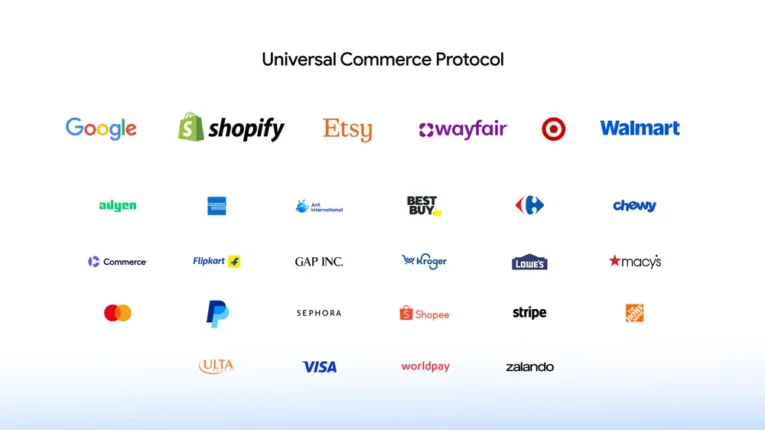
Google AI Mode Checkout is based on a new payment protocol (Universal Commerce Protocol), designed to connect merchants directly to Google’s AI agents. The user expresses an intention to purchase, the AI analyses the available options, chooses the most relevant product and triggers the checkout. Search thus becomes an integrated transactional space, where AI orchestrates the entire journey.
This model is in line with recent developments in generative search. Google AI Mode Checkout transforms AI into an operational player, capable of moving from recommendation to execution without disrupting the user experience.
Google AI Mode Checkout: what this means for advertisers
The arrival of Google AI Mode Checkout is profoundly changing the conversion funnel. Clicks are no longer systematic, and the merchant site is no longer always the main entry point. The decision is made upstream, at the AI agent level, based on product data, the reliability of information, and the brand’s ability to be understood by Google’s systems.
For advertisers, performance no longer depends solely on optimising landing pages or SEA bids. It now depends on eligibility for AI recommendations and the quality of signals transmitted to Google AI Mode Checkout.
Google has also announced Direct Offers, a new AI-powered advertising pilot project. It allows advertisers to offer exclusive discounts to people searching for products. Google gave the example of a carpet search where relevant retailers could offer a special 20% discount. Retailers set up their offers in the campaign settings, and Google determines when to display them.
Business Agent: brand-buyer dialogue
With Business Agent, it will enable shoppers to interact with brands directly in search results. Google describes it as a ‘virtual sales assistant’ capable of answering questions about products using the brand’s language.
This feature will be available from 12 January at Lowe’s, Michael’s, Poshmark, Reebok and other retailers. Eligible US retailers will be able to activate and customise the agent via Merchant Centre.
Google plans to add features that will enable agents to be trained in retailer data, offer product deals, and allow purchases to be made directly from instant messaging.
Opportunities and risks associated with Google AI Mode Checkout
Google AI Mode Checkout opens up new conversion opportunities, particularly by reducing friction in the purchasing process and capturing highly qualified intentions. Well-structured brands can benefit from direct access to the user’s final decision.
At the same time, this model carries risks. Customer relationships may become strained, brand differentiation may become more complex, and dependence on the Google ecosystem may increase. In an environment driven by Google AI Mode Checkout, algorithmic invisibility equates to exclusion from the customer journey.
To take advantage of Google AI Mode Checkout, brands must rethink their approach to search and e-commerce. Product data structuring is becoming a strategic lever, as is the alignment between SEO, SEA and merchant feeds. The goal is no longer just to generate traffic, but to make the offering usable by Google’s AI agents.
Conclusion
Google AI Mode Checkout marks a key step in the evolution of Search towards an agentic and transactional model. Conversion is no longer a simple result, but an automated process driven by AI. For brands, the challenge is now clear: to be readable, selectable and activatable by Google AI Mode Checkout.
Our Google Ads agency supports e-commerce brands in adapting their search strategy to the era of Google AI Mode Checkout, in order to secure their visibility and performance in AI-driven purchasing journeys.



 Julien Soumahoro