For more than ten years, Meta Ads and Google Ads have dominated the world of online advertising. The two American giants have managed to excel in this market to such an extent that, together with Amazon, they have accounted for more than 60% of global revenue in recent years.
Meta Ads stands out on social media, while Google‘s advertising platform outperforms its competitors thanks to search. These two very distinct approaches offer great opportunities for advertisers.
Diversify your strategy by combining Meta Ads and Google Ads
Many brands use Meta Ads to promote their products. Thanks to this advertising platform, advertisers can display their adverts to millions of social media users on platforms such as Facebook and Instagram, based on their profiles and interests. This strategy has enabled many brands to achieve their goals and could be combined with a complementary practice, using Google Ads.
Unlike Meta Ads, which acts on the basis of its users’ profiles and interests, Google‘s advertising platform bases its ecosystem on search intent. By using Google Ads, advertisers can interact with potential customers who have directly searched for information about their products.
By combining their use of Meta Ads with Google Ads campaigns, advertisers can reach a much wider audience active on various platforms, such as Facebook and Instagram, as well as Google and YouTube. All without having to generate new visual media. In fact, using the most effective creations on Meta can be an excellent basis for launching Google Ads campaigns. Static images used on Meta Ads can be used in Google Ads Performance Max, Demand Gen or Display campaigns, while Reels and Stories ads can be used as resources for Performance Max campaigns on Google Ads.
Which Google Ads campaigns should you choose?
Google Ads offers a relatively wide range of advertising options. As a result, advertisers who are used to Meta Ads may find it difficult to choose the most effective type of campaign to achieve a specific goal. Here are some factors to consider:
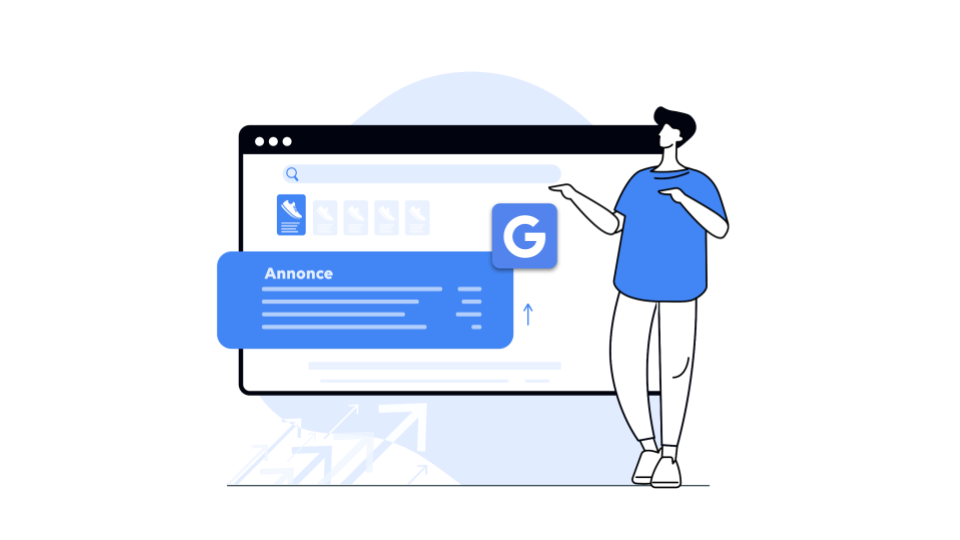
- To target internet users who are actively searching for a product, it is recommended to use search network advertisements. With relevant titles and compelling descriptions, internet users may be encouraged to take action.
- Shopping ads can also be a preferred option for internet users searching for a product on a search engine. This advertising space allows advertisers to showcase their catalogue using a feed of selected products.
- Promoted since their launch, Performance Max campaigns are unique in that they cover the entire Google inventory (Search, Display, YouTube, Gmail, Discover, Maps) from a single campaign. This campaign uses machine learning to target the most relevant internet users and thus promote conversions.
- Finally, Google Ads also offers the possibility of attracting new prospects without them having to search directly for products, with a system that works more like Meta Ads, thanks to Demand Gen campaigns.
Some precautions to bear in mind
For those familiar with Meta Ads, Google Ads offers a wealth of interesting opportunities to diversify their advertising strategy. However, before expanding their distribution channels, advertisers need to take a few factors into account.
Generating conversions through Google Ads can sometimes be costly. Certain campaigns, such as Performance Max, which use machine learning techniques, allocate part of the budget to conducting multiple tests before guiding brands towards their objectives. With this type of campaign, the learning phase can sometimes last up to six weeks, during which time profitability is generally limited.
To effectively transition from Meta Ads to Google Ads, it is also important to understand how targeting works. There is a subtle difference between Meta Ads’ interest-based targeting and the AI-driven audience signals found in several campaigns within the Google Ads platform. While Meta Ads restricts delivery to a targeted group of users, Google Ads tends to expand its scope based on the guidelines provided by the advertiser, using its artificial intelligence tools to find relevant targets.
Therefore, switching from one advertising platform to another, although appropriate in many cases, must be done carefully. An approach tailored to the specific characteristics of each of the two advertising platforms is necessary to limit unnecessary investment and steer campaigns towards achieving their objectives.
Would you like to add Google Ads to your advertising strategy? Feel free to consult our Google Ads Agency.



 Pierre Blarre